

Cutting It Again
There is a moment every editor knows. You export the last file, watch it through one more time, and finally let it go. For an independent filmmaker that moment carries a lot of weight, because it usually means the money is spent, the drives are full, and the people in the story are waiting to see what you did with a year of their lives. I have lived that moment more times than I can count. What I have learned over the last few years is that it is rarely the end. For a one-man company, finished is a moving target.

This fall I went back into a piece of work that had already done everything I asked of it. Episode I of UNDERESTIMATED had premiered, aired on broadcast television and been watched by the families and the community it was made for. The response was more than I had hoped for. And still, I opened the timeline again and started cutting from the top.
Who You Cut For
The first version was made for the people who lived it. When you cut for a hometown audience, you get to lean on everything they already carry with them. They know the roads into Hopkins. They know the coaches' voices, the names on the jerseys, and what a summer practice on that field feels like before anybody says a word. A lot of what makes a local film work happens in the viewer's own memory, and as the filmmaker you get to borrow it.
That version was also cut for television. Broadcast has its own rules: a fixed runtime, room for commercial breaks, and acts built to bring people back after every interruption. I don't resent those rules. They taught me discipline, and they put the story in front of people who would never have found it on their own. But they shape every decision you make. You end a scene a beat early because the break is coming. You build toward a moment because the clock says it's time, not because the story is ready.
When I decided to recut it for people beyond the Midlands, the question changed. What does this hour look like to someone who has never been to Hopkins? Someone in another state who has never heard of the Diamond Hornets, never driven past the pines and the porches that have sat there longer than the highway? Someone whose eye I trust put it to me plainly. I needed to be the best creator I could possibly be for this one episode. Not the whole series. This one hour.
That changed how I watched my own film. Familiar faces stopped carrying the weight on their own, and every scene had to explain why it mattered to someone with no reason to care yet. A stranger doesn't need less from a film than a hometown crowd does. They need a door in. They need to understand the place before they can feel anything about the people in it, and they need a reason to stay through the slow parts that a local audience would sit through out of love.
Slower Than I Know How to Work
I am wired to finish. Some of that comes from football, and some of it comes from years of working alone against deadlines that don't move. My whole process is built around momentum: shoot, log, build, cut, export, deliver, and on to the next thing. When I'm in that rhythm I can move through a mountain of footage quickly, and I have always taken some quiet pride in that.
The recut asked for the opposite. It needed a new cold open, one that could introduce a place to a stranger before it introduced a single player. The new opening starts with the words There are still places, and everything after them exists to make someone who has never been there feel why those words matter. It needed new narration, written and rewritten until every line earned its spot. And it needed me to sit with a single scene for an hour and change two cuts. Some days that felt like progress. Other days it felt like standing still, and standing still makes me nervous.
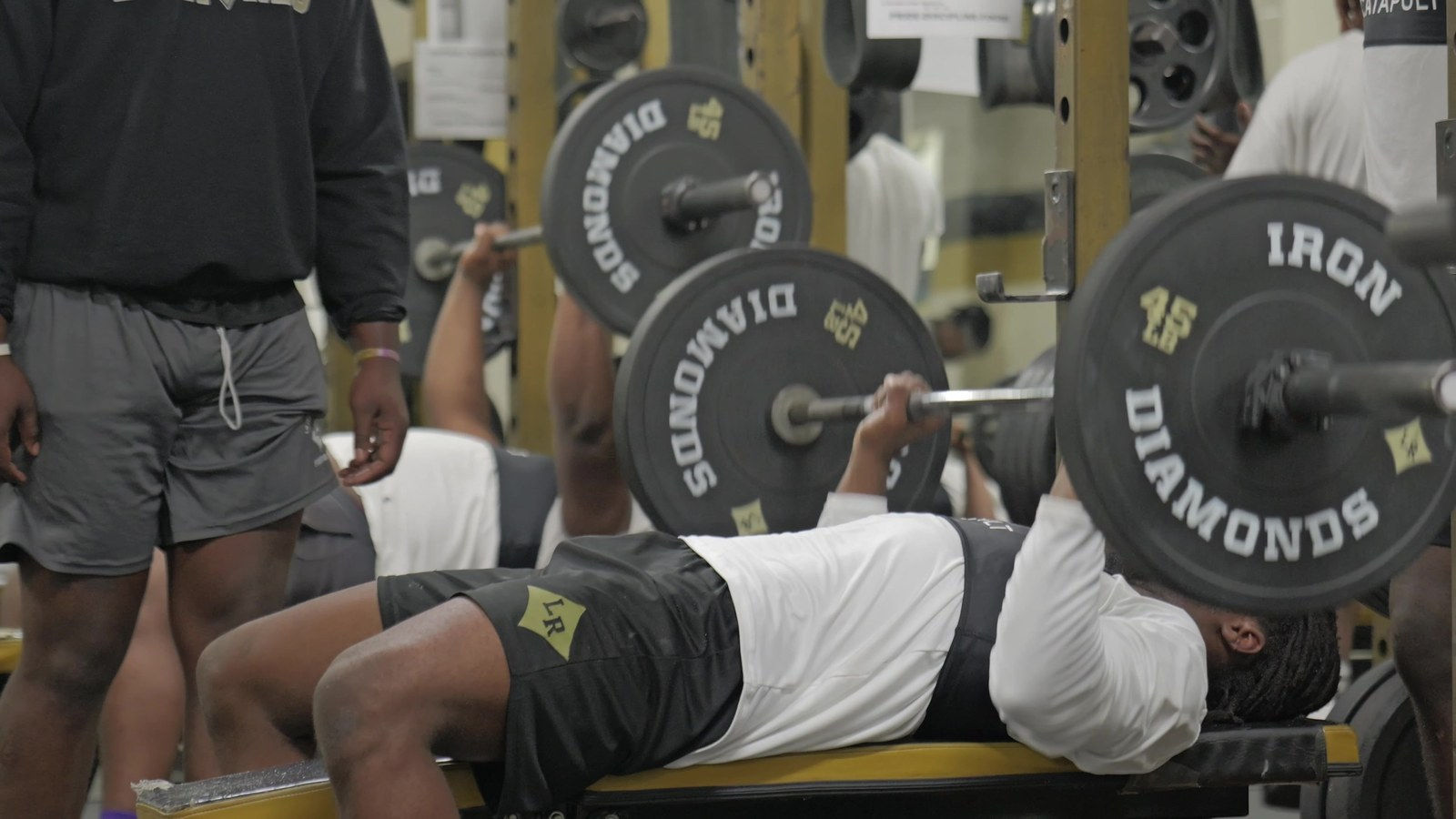
The former player in me kept measuring the day in reps. How many scenes did I finish? How many minutes did I lock? By that count, some days were close to zero. It took me a while to accept that this was a different kind of rep. In the weight room, slow and controlled is often harder than fast, and it's usually where the strength actually gets built. The edit turned out to be the same. Rewriting a single line of narration five times, or watching the same thirty seconds over and over until I understood why it wasn't working, was the work itself and not a delay on the way to it.
Even the technical side pushed back. The original episode lived in an older Final Cut timeline, and moving it into Resolve took far longer than I planned. I lost an entire work session to nothing but untangling the old project so it would open cleanly in the new one. On a deadline, that kind of day feels like a loss. Looking back, it was part of the lesson. I couldn't rush the transfer any more than I could rush the story, and the old habits I brought into the edit needed the same untangling the project file did.

I've Been Here Before
This isn't the first time I've gone back into my own work. When we relaunched our website in early 2025, about a year after Leading the Charge wrapped, I remastered the Anderson University episodes and released them there. That series followed a brand-new college football program through its first year, a team that practiced for a full season before it ever played a game. I had cut those episodes fast, the way you cut when a program is waiting on the next one and practice starts again tomorrow morning. A year of distance let me see them differently. Some of it held up. Some of it I would never cut that way again.
I think the habit comes from the studio. Before I ever picked up a camera professionally, I spent years as an artist making drawings, performances, videos, sculptures and installations under the kendallprojects name. In the studio, going back to a piece is normal. You hang something on the wall, live with it, and return with fresh eyes. Film moves so fast that we forget we're allowed to do the same. Independent filmmakers don't have many advantages, but one of them is that the work is ours to return to.
That only stays true if you protect it. Every agreement you sign says something about what you're allowed to do with the work later, whether you read that line or not. It's the kind of detail that's easy to wave through when you're just grateful someone wants to air your film. I've learned to read it slowly. If you make independent films, think about the second life of the work before you sign away the first one.
What Changes and What Can't
So what actually changed? The order of some scenes. The way the place is introduced before the people. Where the narration speaks and where it steps back and lets the moment carry itself. Without commercial breaks to plan around, scenes can breathe or end abruptly, whichever the story needs, and moments that were trimmed for time can finally run their full length.
What can't change is the truth of the people in it. A recut is a new door into the same house. If I move a moment so it plays bigger than it was, or build a feeling the players never had, I've broken something far more important than any edit. The families who watched the first version need to recognize their sons in the second one. That was the line I held the entire time, and it's the line I'll hold in every version that comes after this one.

A recut is a new door into the same house.
There's a hard question underneath all of this for anyone who makes independent work: when is it done? I don't think there's a clean answer. The first version was done for the people it was made for, and it did its job well. The new version is being made for people who haven't met these young men yet. Both are honest. They are simply facing different directions, and each one has to earn the trust of the people watching it.
I'm learning that a slow pace is a skill, not a weakness. Distance from the edit makes me better when I come back to it, and patience shows up on the screen even when nobody can name what they're seeing. Cutting it again taught me that some of the most important work happens when nobody is waiting on you and nothing is due, and the only question left in the room is whether it's as good as it can be. If you've ever finished something and felt deep down that it wasn't quite finished, that feeling is worth listening to. Not every piece deserves a second pass. The ones that matter usually do.
Every Thursday, the Film Room letter carries what doesn't make the Journal. This week it's a set of frames from the original opening placed beside the new cold open, with a note on what changed and why. Get the Film Room letter
If you haven't seen where all of this started, watch the Official Trailer.
UNDERESTIMATED is made possible by Samuels Reynolds Law Firm, Midlands Technical College, Healthy Blue SC and Abacus Planning Group.


